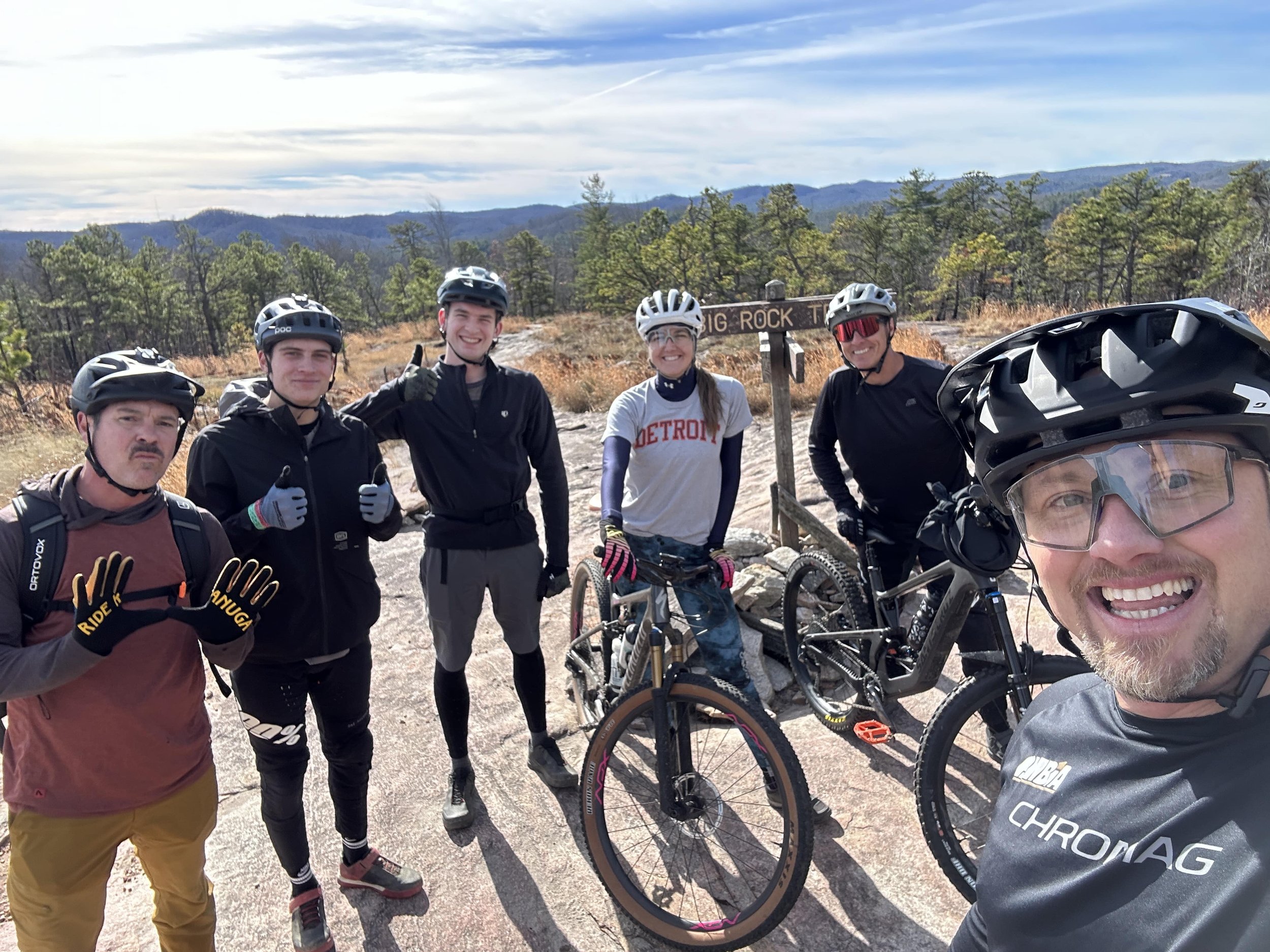
Can You Really Ride Your MTB Four Seasons Here?
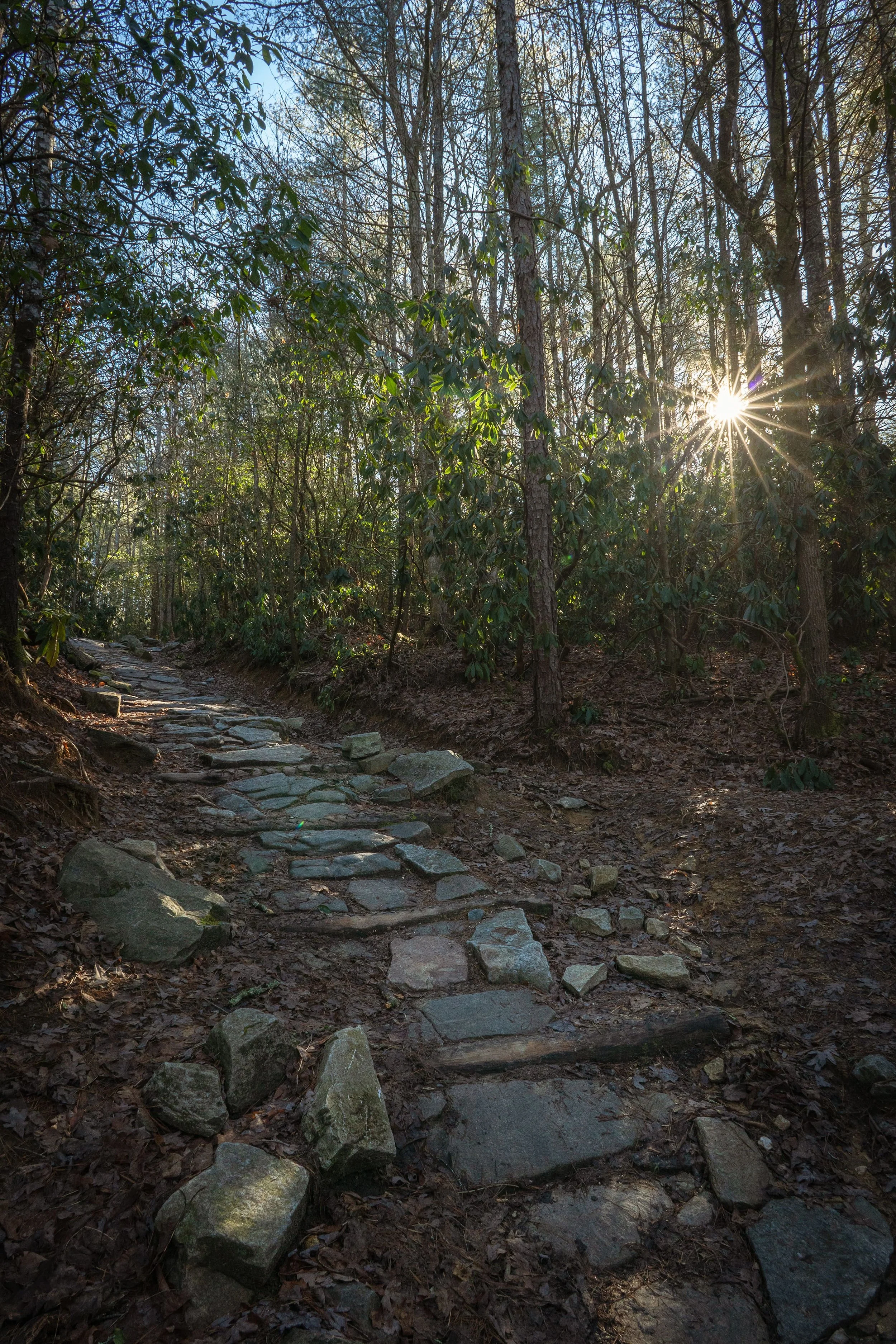
Never underestimate the power of the winter sun here in Appalachia and proper layering, even in the 30s & 40s.
Let’s talk how to stay warm while riding your bike this winter and why WNC is a (pretty much) year-round mountain bike destination in our eyes.
We admit, WNC absolutely has its fair share of pretty miserably cold days, maybe even weeks, where the wind whips and the rain is frigid, I mean we are in the mountains and a temperate rainforest at that...
But, it’s not all like that. Asheville receives 212 days of sun a year — meaning that even in the darker months there are still days where you can still get after it.
On our ‘blue-bird’ days, after the leaves have fallen, you can see all the views that were hidden just months ago, and the sun beams down through the, now open, forest to warm the brisk breeze. And, with the right knowledge and gear, being outside is comfortable and enjoyable for many.
Ever heard the saying, “there is no bad weather, just bad gear selection,” well, we wholeheartedly agree.
Let’s break down how to stay warm while recreating throughout the winter with proper layering and temperature regulation. It’s 100% a skill and as coaches, we want you to be empowered with all the knowledge possible to enjoy biking the fullest.
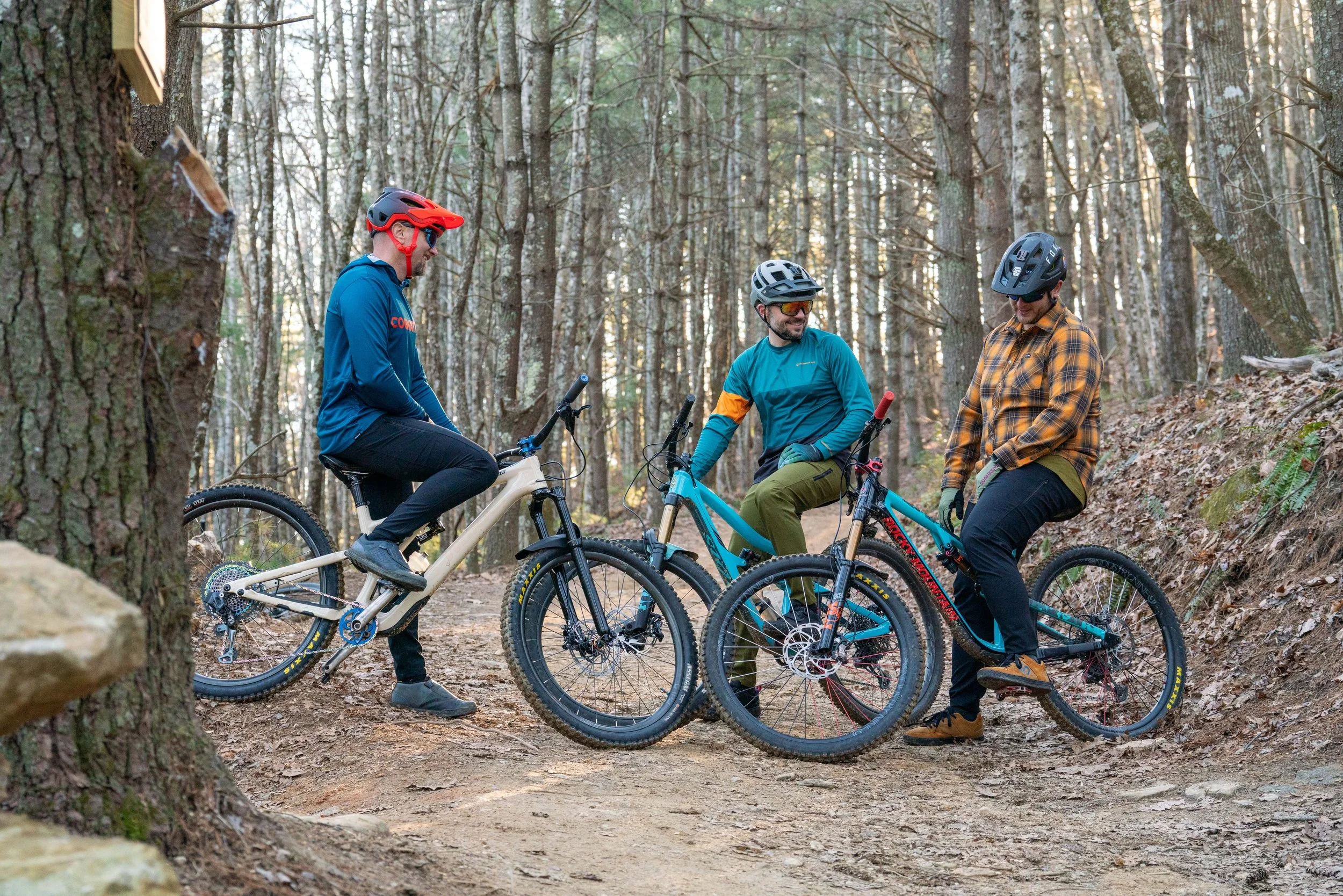
👕 Layering for Success: Stay Warm, Stay Dry
The key to comfortable cold-weather riding is to be warm, but not too warm. Sweating too much can make it harder for your body to hold heat before the moisture evaporates.
Everyone's body runs differently. Some riders even use a short-sleeve as their bottom layer because they know they always run warm, work up a sweat climbing, and could freeze easily on the descent if there is a lot of moisture.
Generally, think of three core layers:
1. Breathable Base Layer
This layer is closest to your skin and manages moisture.
Merino wool or polyester blends.
What it Does: Wicks sweat away from your skin to keep you dry and regulate temperature.
2. Insulating Mid-Layer
This layer provides warmth. Lean towards options that are technical, breathable, and lightweight.
Grab a knit fabric or a lightweight pullover designed for activity. Though, you can use thicker options like puffy vests, fleece, or other synthetic blends too depending on the temps.
Sometimes we pack two, a lightweight mid-layer with a more insulating one if the temps drop or rise during a ride.
Vests are Great: Packable puffy or fleece vests are an excellent for keeping your core warm while leaving your underarms free to vent excess heat and your arms free for movement.
Insider Tip: A thicker sun shirt can be a great mid-layer year round. It's breathable, lightweight, and often comes with a hood for full coverage.
Think, what would I need to stay warm on a descent? Will the sun be dropping along with the temperature by the end of the ride? If I take off all my layers, will they fit in my bag? Is it too thick that I can’t move and it makes me sweat?
3. Shell Layer (Wind & Water Blocking)
This is the outermost layer, designed to protect you from the elements. Blocks wind to keep your stored heat in during fast descents, and keeps you (decently) dry if there is rain.
Lightweight rain jackets or "soft shells." Don't think of the heavy, bulky, and less breathable shells you would need for skiing. Look for packable rain jackets that allow for movement. Pit zips are excellent feature for more temperature regulation adjustments.
🧤 Essential Accessories
Gloves: A good set of gloves is key. If you sweat a lot on climbs, pop them off so they don't get wet. You will have frozen fingers if you descend with moist gloves in the chilly temps. Consider packing two pairs if you need to!
Socks: Good quality socks with a merino blend are highly recommended.
Footwear: If socks still aren't cutting it, waterproof bike shoes are a great investment if you are losing feeling in your toes. They can help cut the wind and keep you drier, especially if you find yourself crossing streams often, like in Bent Creek.
We aren't going to lie—finding what layers work best for you takes practice. Once you dial it in, though, off-season riding will soon become a treat.
You'll enjoy quiet trails, unencumbered mountain views, brisk breezes, warm sunshine, moody forests, and soaking up a season many choose to hide from.
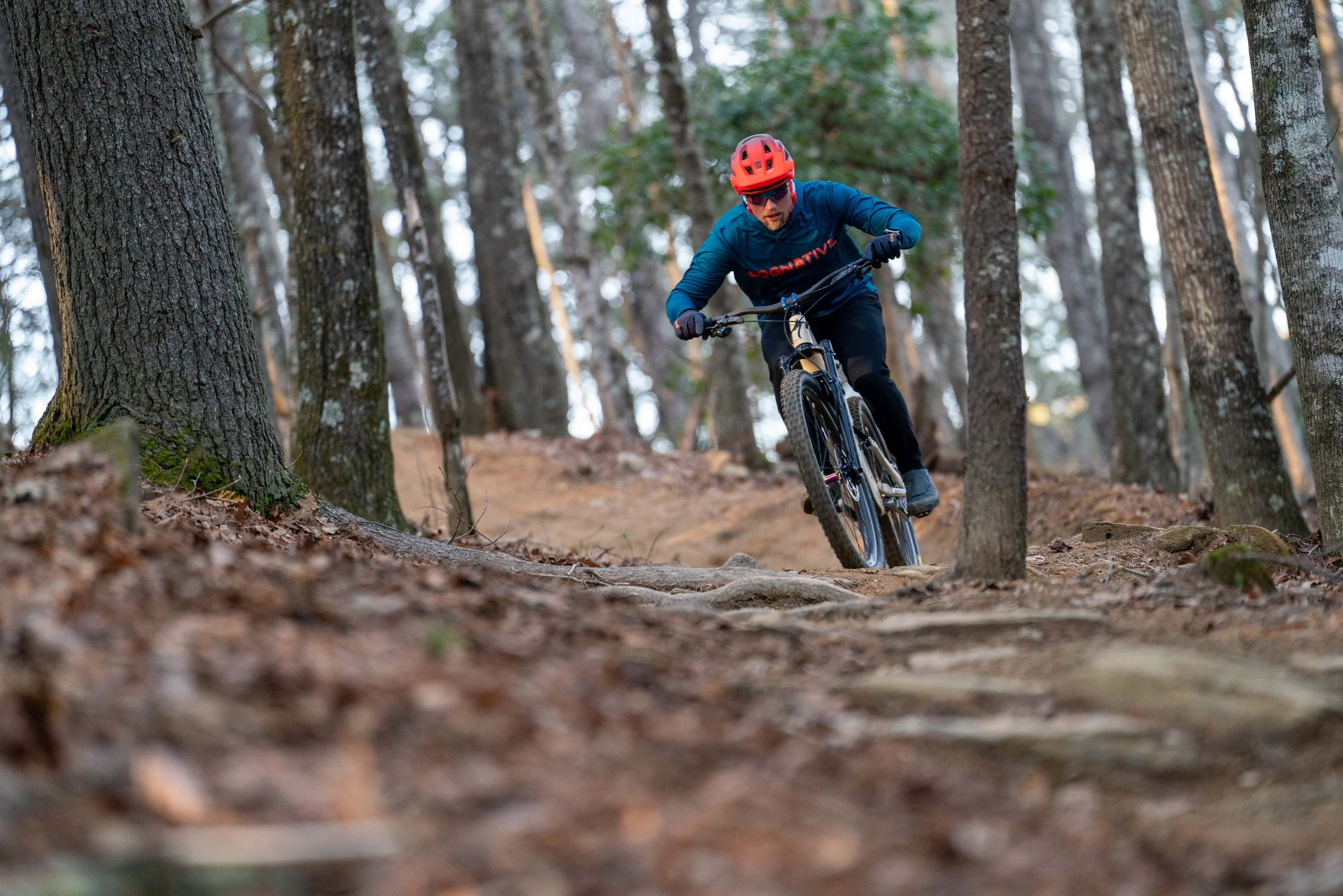
You will enjoy quiet trails, unencumbered mountain views, brisk breezes, warm sunshine, moody forests, and soaking up a season many choose to hide from.
❄️ Be a Good Trail Steward: Respect the Cycle
We do have to contend with the inevitable freeze-thaw cycle once we start getting more moisture and consistently below-freezing days.
Avoid trails that have been recently resurfaced, have a lot of red clay, or are flow trails — these typically dry out the slowest and are the most susceptible to this cycle.
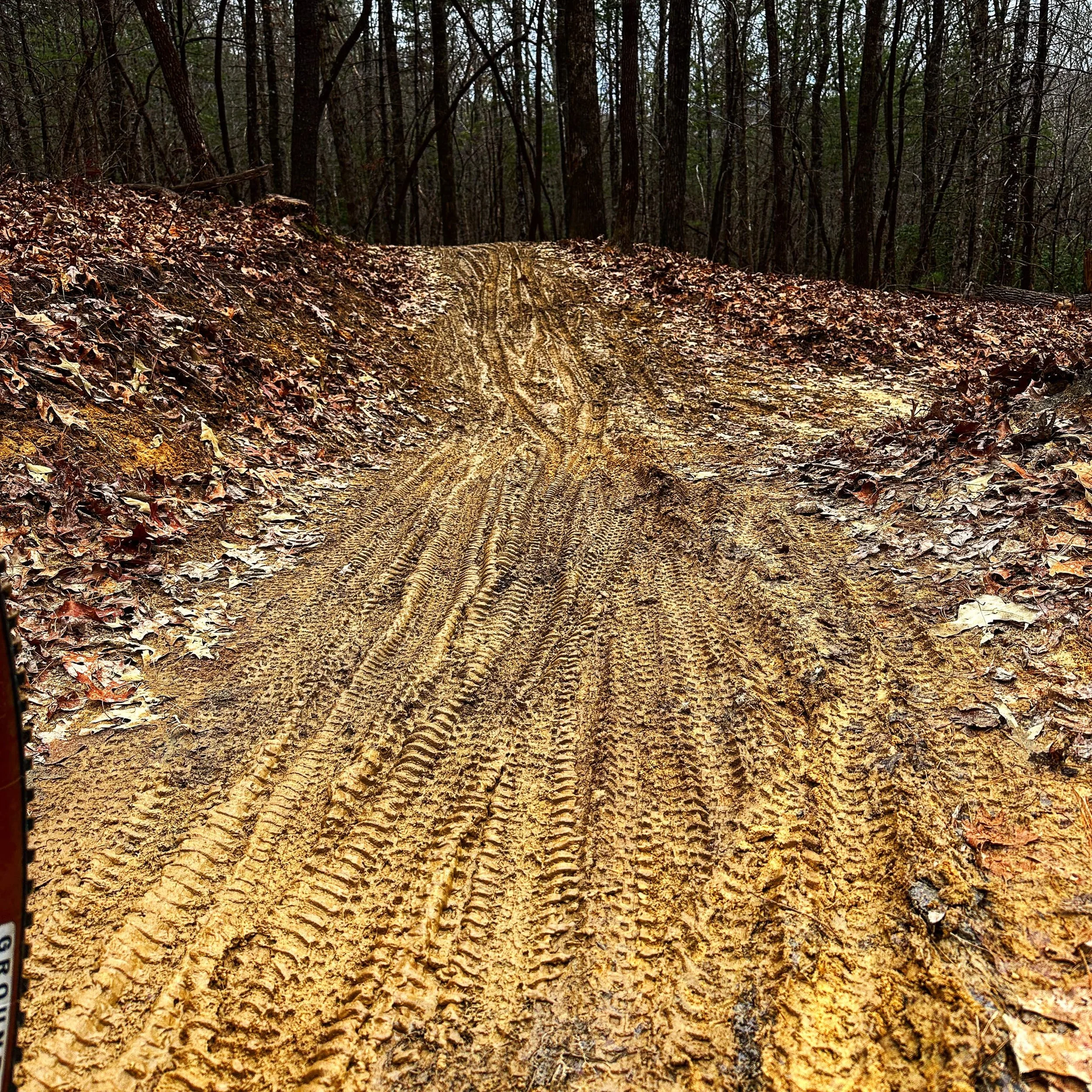
If you leave excess tread marks, this means the trail is too wet to ride!
This was the infamous Ridgeline Trail...with a section destroyed by riders who were not following good rider etiquette by riding after a freeze-thaw. It has been resurfaced since, though.
But you can avoid this worry altogether by riding:
Early Morning: Hit the trails while they are still frozen solid.
Mid-Afternoon: Ride trails that are known to dry out well later in the day (and we know which ones those are!).
If the trails are too wet, it’s a great time to cross-train, gravel ride, strength train, or road ride.
Unsure how to train off-bike or on a trainer? We offer fitness programs and strength training designed to improve your riding skills!